“We on Earth are passing guests. And the guest's intimate sense of disorientation - not of domination - is the principle that can fuel concrete practices of change and downsizing of our desires that consume the earth;we can develop a different vision towards nature and a concrete commitment to respect it and enhance it in all its characteristics.”
Guido Sertorio, founder of Podere ai Valloni
To read our sustainability report for the year 2022 please click HERE.
The original vision of the Podere ai Valloni founders has always been based on respect for the natural environment in which they live and work, and the entire company was built with this in mind.
The management of vital resources (such as water and air), respect for biodiversity, protection of the landscape as a common good, agri-food safety, and reduction of carbon dioxide emissions are crucial points to which we have dedicated care and attention since our establishment in 1980, both in the design phase and in the implementation and organizational phases.
Below, we provide a more detailed overview of our interventions in various areas.
WATER
At Podere ai Valloni, we place great importance on water. It is the primary source of life and one of the planet's most endangered resources.
Since the house and cellar were renovated, we installed two large cisterns to collect rainwater from the roofs of all the buildings.
This method allows us to store up to 142 cubic meters, equivalent to over 140,000 liters of water, which is used for vineyard treatments, irrigation, gardening, washing floors and tractors, etc.
Furthermore, for vineyard treatments, we use a low-volume atomizer, which works by nebulizing the water used, allowing us to save approximately 50% of water compared to traditional tools.
This also reduces tractor trips to refuel, lowering emissions and limiting soil compaction, in a virtuous cycle that benefits the vineyard and the environment as a whole.
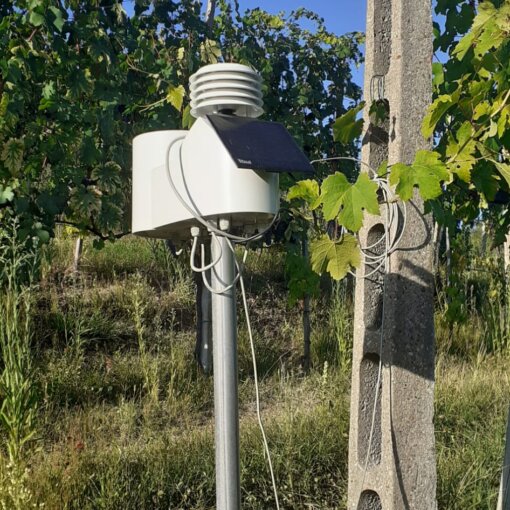
An iMETOS station for monitoring agrometeorological and environmental conditions helps us assess the weather situation day by day, allowing us to keep the vineyard in perfect condition and carefully plan treatments, saving time, energy, and water, and reducing the use of pesticides to essential times.
iMETOS 3.3 was designed to monitor data with a wide variety of sensor sets. The station measures, records, and sends data to the FieldClimate cloud, which we access through web and mobile apps and share with other winemakers in the area.
Environmental data (humidity, wind, temperature and its variations, nighttime range, etc.) are processed there, and the system helps us predict the onset of classic viticultural diseases such as powdery mildew and downy mildew and intervene in a targeted manner with regard to timing, location, and product quantities.
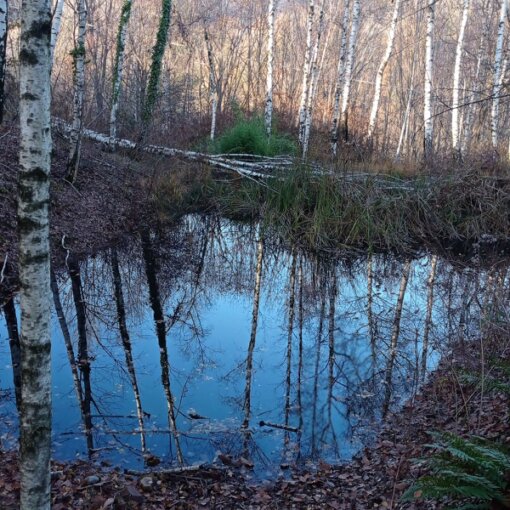
The water used in the cellar and our accommodations comes from our own spring in the forest.
This pure source allows us to be independent and avoids the environmental costs associated with water transportation and supply.
RENEWABLE ENERGY
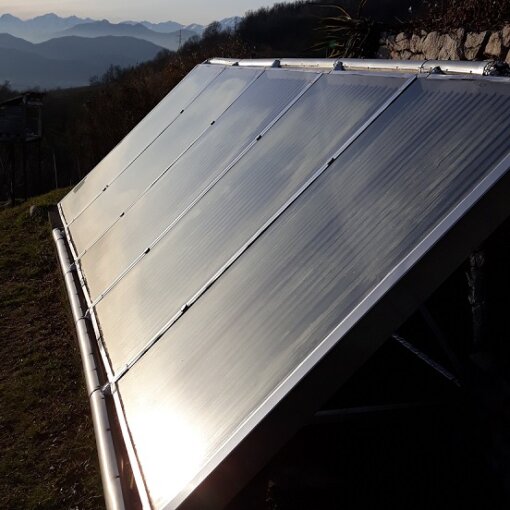
Renewable energy has always been a focus of our attention.
We use solar panels to heat water for our home and cellar.
Since 2011, we have had a photovoltaic system for electricity generation. Thanks to the 98,860 kWh of energy generated, the panels have allowed us to save 52,396 kg of CO2 over almost 10 years. While this number may be difficult to interpret, it corresponds, for example, to the CO2 required to produce 8,732 kg of plastic.
In addition to being largely independent of traditional energy sources, we are able to feed the excess energy produced by the photovoltaic cells into the system, selling it to the national grid, thus promoting the greater diffusion of clean energy.
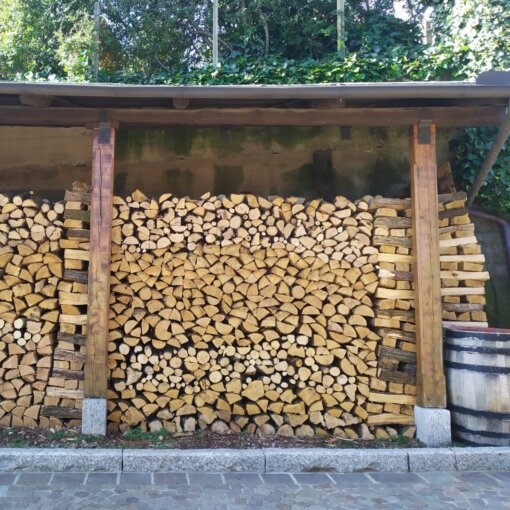
Internal heating is provided by innovative wood-burning boilers that we fuel exclusively with dried plants from our forest clearing.
As is well known, wood is one of the primary sources of renewable energy, and choosing to use wood from our own forest also allows us to limit energy use and emissions related to fuel transportation.
With the replacement of the boiler that heats the office and tasting room, in 2022 we measured an average reduction in wood consumption of approximately 2,000 kg compared to the previous year. If we consider that burning 1 ton of wood avoids the emission of approximately 900 kg of CO2 if burned with an efficient stove like our modern boiler, we can see how this translates into a saving of 13,500 kg of CO2 compared to using fossil fuels and approximately an additional 1,800 kg of CO2 compared to our 2021 consumption.
Furthermore, the walls of the house are built according to the best energy-saving criteria, as are the windows and doors, in order to maintain a constant and comfortable internal temperature as best as possible.
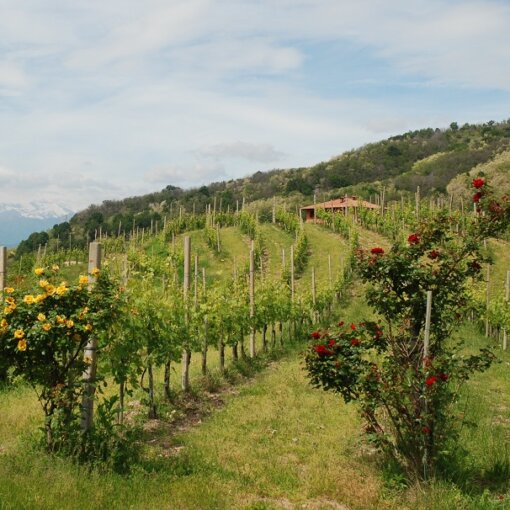
The plots of land were all purchased close to the winery to minimize tractor movements, avoiding long distances and optimizing vineyard work. This allows for significant CO2 savings, thanks to a lower fuel consumption, and also maximizes grape quality during harvest, reducing transportation time to the winery for vinification.
LIGHT BOTTLES
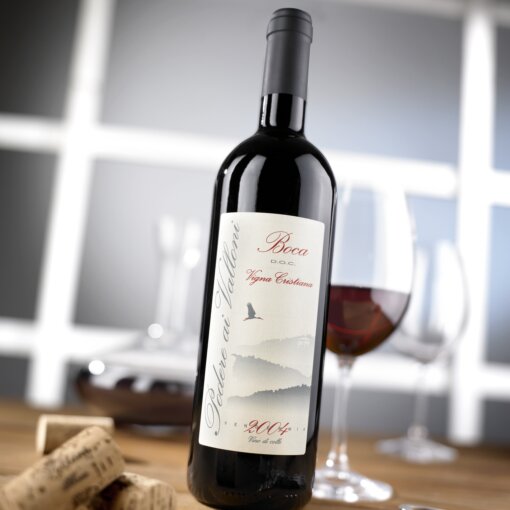
Our wines are packaged in lightweight bottles, which offer several important advantages:
● Less weight during transport,
● Lower production costs,
● Reduced use of resources for glass production.
In agreement with our glassworks, we only use bottles weighing less than 500 grams, varying depending on the type of wine being bottled.
And if we consider that for every kilo of glass produced, CO2 emissions are equal to 2.7 kg (source: Cantina Banfi study), we can see how producing a single lightweight bottle (400 g) saves 459 g of CO2 compared to a traditional 570 g bottle.
Even the bottle we use for Boca Vigna Cristiana, traditionally heavier than the others we use, still weighs less than more common bottles, saving 189 g of CO2 per bottle.
Furthermore, each lightweight bottle saves approximately 200 grams of virgin raw materials, the extraction and processing of which contributes to the increase in acid rain and the greenhouse effect, and corresponds, for example, to the emissions produced by a medium-powered car for every kilometer traveled.
LABELS
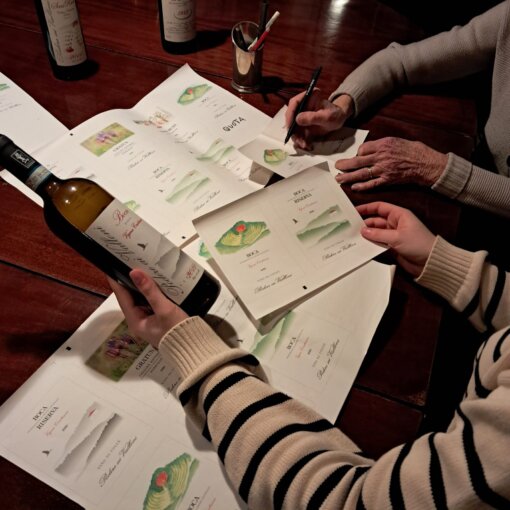
Our recycled paper labels also meet the need for sustainability, attention, and care for the environment.
They are printed by Roberta Bolsi, an FSC®, ISO 14001, and Ecoprint-certified manufacturer that uses exclusively 100% renewable energy.
Furthermore, the company uses TheGreenLabel printing protocol, which allows for high-quality labels using a production process that significantly reduces environmental impact compared to standard production methods.
CORKS
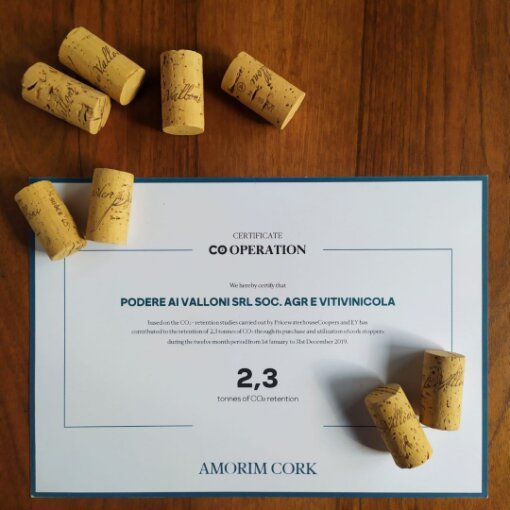
"Completely natural, reusable, and recyclable, the cork used for cork stoppers is perfectly in line with contemporary society's environmental awareness." (Amorim)
For several years, we have been purchasing our cork stoppers from Amorim, a company renowned for its commitment and attention to environmental issues. With this in mind, Amorim calculates the emissions saved through the use of its products.
Using this material also allows us to focus on the important role cork trees play in the fight against global warming, as in addition to producing and releasing oxygen through photosynthesis, they trap CO2.
The tree's roots, leaves, trunk, and bark store CO2 throughout its lifespan, which can easily exceed 200 years. Cork products maintain this storage capacity throughout their entire lifecycle, thus significantly contributing to reducing the carbon footprint of various activities. As is well known, the bark of cork oaks continually renews itself, and Amorim guarantees a harvesting cycle in its forests that preserves the health of the tree and the highest quality of the material.
Even used corks have a purpose, which is why we participate in the ethical project promoted by Amorim. The project aims, in addition to collecting and recycling corks—which are sold to partners specializing in cork crushing for green building—also to raise public awareness of environmental protection and the preservation of cork forests, which are strategic in the fight against desertification and contribute to reducing global CO2 emissions.
PALLETS
We have chosen to partner with Corno Pallets, a company that has been certified by the PEFCTM (Programme for the Endorsement of Forest Certification) for years, to purchase pallets whose wood comes from legally and sustainably managed forests, guaranteeing that it does not originate from illegal logging or irresponsible interventions.
The following principles are an integral part of PEFCTM forest management:
● preserves the forest as a habitat for animals and plants;
● maintains the protective function of forests for water, soil, and climate;
● protects the biodiversity of forest ecosystems;
● verifies the origin of wood raw materials;
● provides for the felling of trees respecting the natural growth rate of the forest;
● provides for the areas subject to felling to be reforested or, preferably, regenerated and renewed naturally;
● protects the rights and health of workers;
● encourages short supply chains;
● ● guarantees the rights of indigenous peoples and forest owners
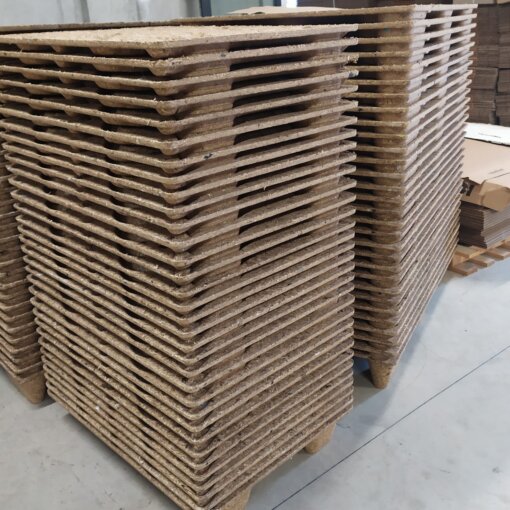
Our pallets, in particular, are made of pressed reclaimed wood, are 100% recyclable and completely biodegradable, and no trees were cut down in their production. Their stackability allows them to be loaded onto a single vehicle, with a capacity of approximately 750 traditional pallets, over 2,000 units, significantly reducing empty spaces and CO2 emissions.